
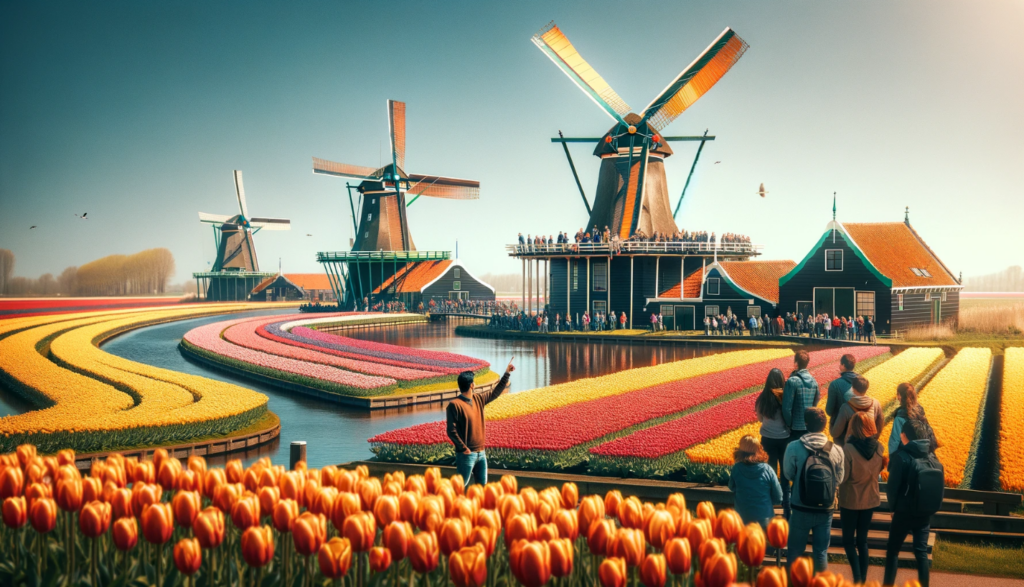
Why Amsterdam’s Windmills Are a Must-Visit
Did you know the Netherlands once had over 10,000 working windmills? These iconic structures have shaped Dutch heritage for centuries, serving as powerful symbols of the nation’s ingenious battle against water. The skilled millwrights who built them created engineering marvels that still function today.
Today, the windmills near Amsterdam stand as living monuments to this remarkable industrial history. From polder drainage systems that kept the low-lying land dry to lumber mills powering the shipbuilding industry, these structures tell the story of Dutch innovation.
From the world-famous Zaanse Schans to hidden gems like Molen van Sloten, these historic Dutch windmills offer visitors an authentic glimpse into traditional industries—oil pressing, lumber sawing, spice grinding, and even paint making. Whether you’re a history enthusiast, photographer, or simply seeking a quintessential Dutch experience, exploring Amsterdam’s windmills on a private tour reveals a side of the Netherlands most tourists never see.
Top Windmills to Visit Near Amsterdam
Zaanse Schans Windmill
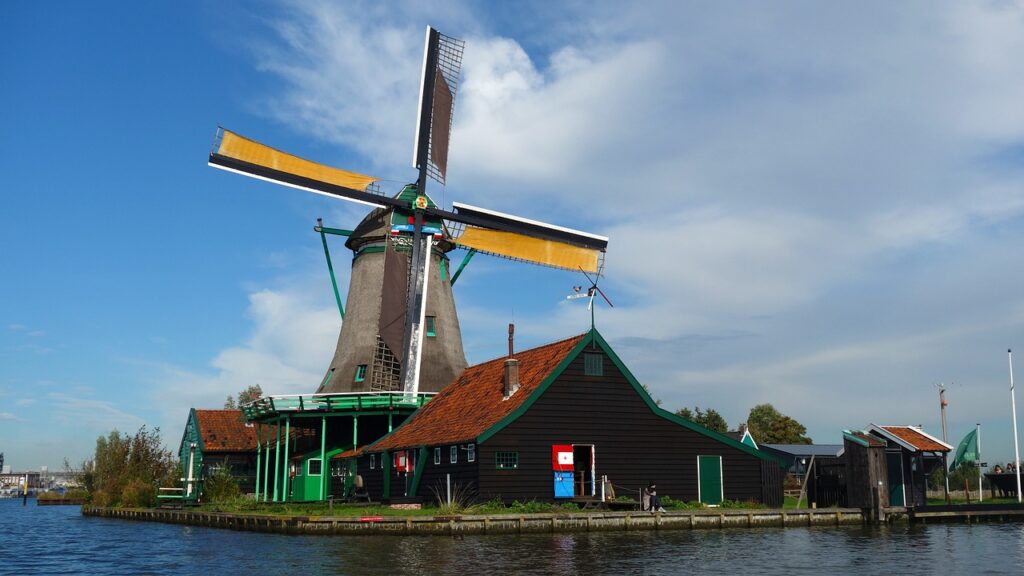
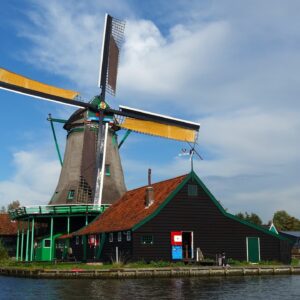
Located just 17 minutes by train from Amsterdam Central Station, Zaanse Schans is the crown jewel of Dutch windmill villages. This open-air museum features a stunning collection of well-preserved historic windmills, each with its own fascinating story and purpose.
The windmills here aren’t just for show—many remain fully operational. Visit De Kat, the world’s only working paint-grinding windmill, or watch lumber being cut at Het Jonge Schaap sawmill. The massive wooden sails and intricate sail mechanics demonstrate the ingenious engineering of Dutch millwrights. Beyond the windmills, Zaanse Schans offers traditional wooden houses, artisan workshops, a cheese factory, and clog-making demonstrations.
Book a private tour to Zaanse Schans to skip the crowds…
Quick Facts: Distance: 20 km (12 miles) | Train: 17 min from Central Station | Entry: Free outdoor access (individual mills €5-15) | Best months: April-October
De Gooyer Windmill
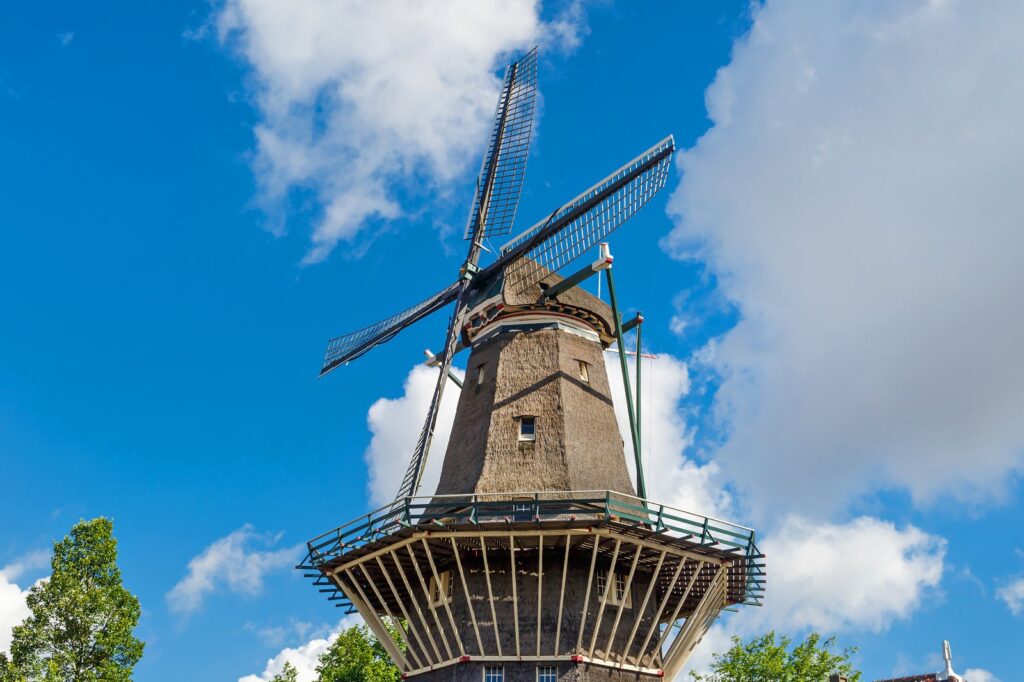
Standing tall in Amsterdam’s eastern district, De Gooyer is the tallest wooden windmill in the Netherlands. Built in 1725, this octagonal mill once served as a flour mill and remains one of Amsterdam’s most recognizable landmarks.
What makes De Gooyer special for visitors? It sits right next to Brouwerij ‘t IJ, one of Amsterdam’s most beloved craft breweries. After admiring the historic windmill, you can sample award-winning organic beers on their sunny terrace—a perfect combination of Dutch heritage and modern culture.
Quick Facts: Location: Funenkade 7, Amsterdam Oost | Interior: Not open to public | Brewery: 2pm-8pm daily | Tip: Visit on a sunny afternoon for photos
The Windmill in Sloten
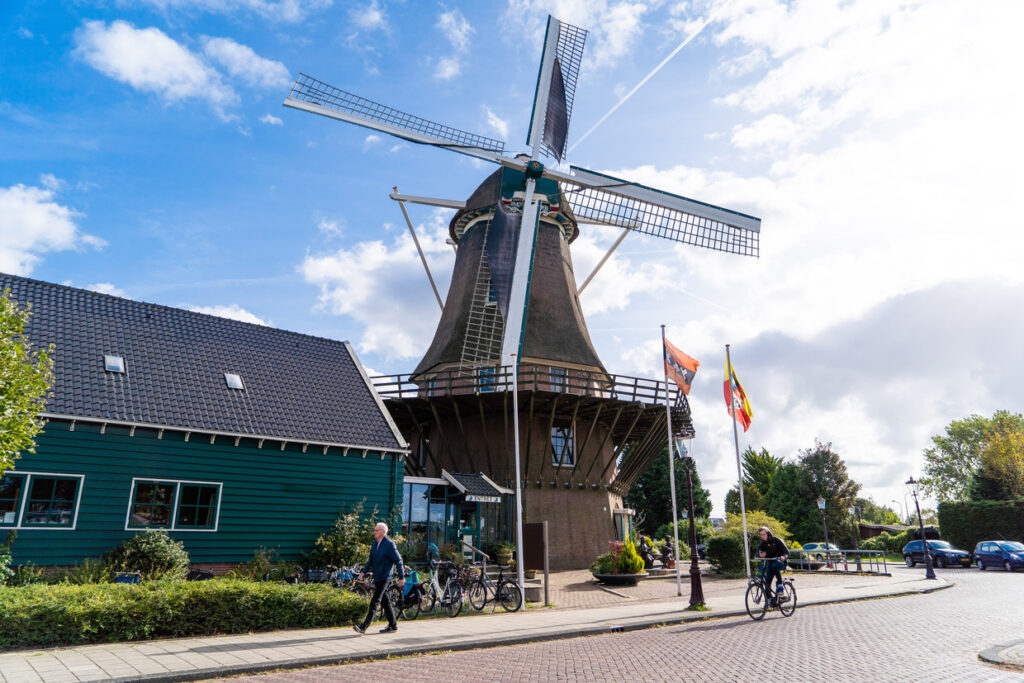
Molen van Sloten holds a unique distinction: it’s the only windmill in Amsterdam open to visitors daily and still fully operational. This authentic polder mill continues its centuries-old work of draining water from the surrounding land—a fascinating demonstration of traditional Dutch water management that kept the low-lying Netherlands dry.
The polder drainage system is an engineering marvel. When water levels rise in the surrounding farmland, the windmill’s massive sails catch the wind and power an Archimedes screw that lifts water from the lower polder into the higher canal system. This ingenious mechanism, perfected by Dutch millwrights over centuries, is what made settlement possible in lands that would otherwise be underwater.
Step inside for guided tours that reveal the intricate sail mechanics and gearing systems. Watch the miller demonstrate how wind power is converted into the rotational force that drives the drainage pump. The interior showcases original wooden beams, stone grinding wheels, and the complex system of cogs and shafts that transfer power from the sails.
The mill also houses ‘Rembrandt in the Attic,’ an audiovisual exhibition exploring the famous painter’s life and his connection to the Dutch landscape he captured in countless drawings and paintings. Don’t miss the nearby IJshoeve Sloten for artisanal Dutch ice cream, or explore the charming village of Sloten with its historic canal houses.
Quick Facts: Address: Akersluis 10, Amsterdam | Entry: €7.50 adults, €4 children | Hours: 10am-4pm daily | Includes: Guided tour + Rembrandt exhibition | Getting there: Tram 2 to Sloterpark
Riekermolen windmill
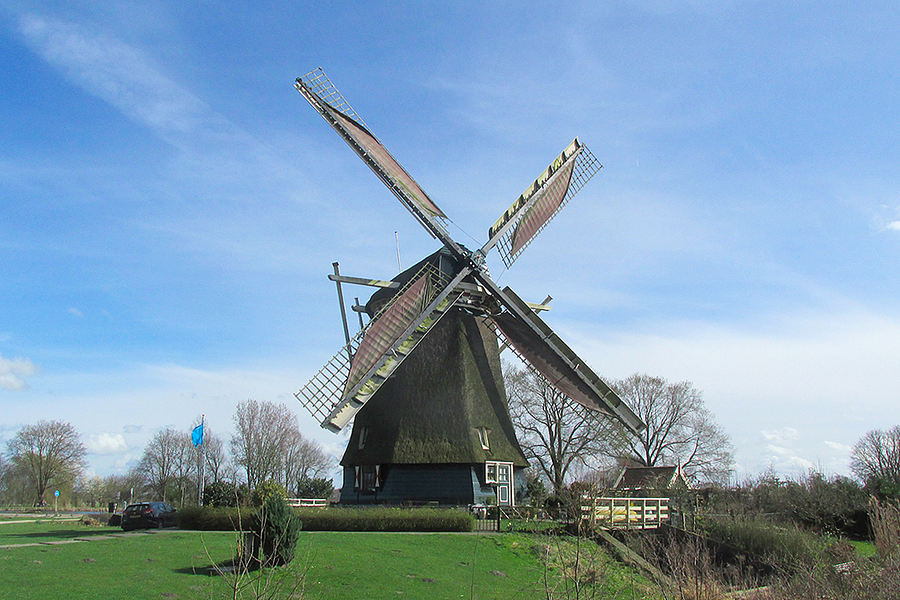
Perched on the banks of the Amstel River, Riekermolen dates back to 1636 and offers one of Amsterdam’s most picturesque windmill settings. Originally built for polder drainage, this historic mill gained international fame when it appeared in the ‘Sunflowers’ episode of Ted Lasso.
A bronze statue of Rembrandt stands nearby, commemorating the countless sketches the master painter created in this scenic location. The surrounding Amstelpark area is perfect for cycling or leisurely walks, making Riekermolen an ideal stop on a bike tour along the river.
Quick Facts: Location: Amstelpark, south Amsterdam | Interior: Limited (May-Sept weekends, weather permitting) | Best for: Photography, cycling | Nearby: Rembrandthoeve farm with free cheese tastings
De Otter Windmill
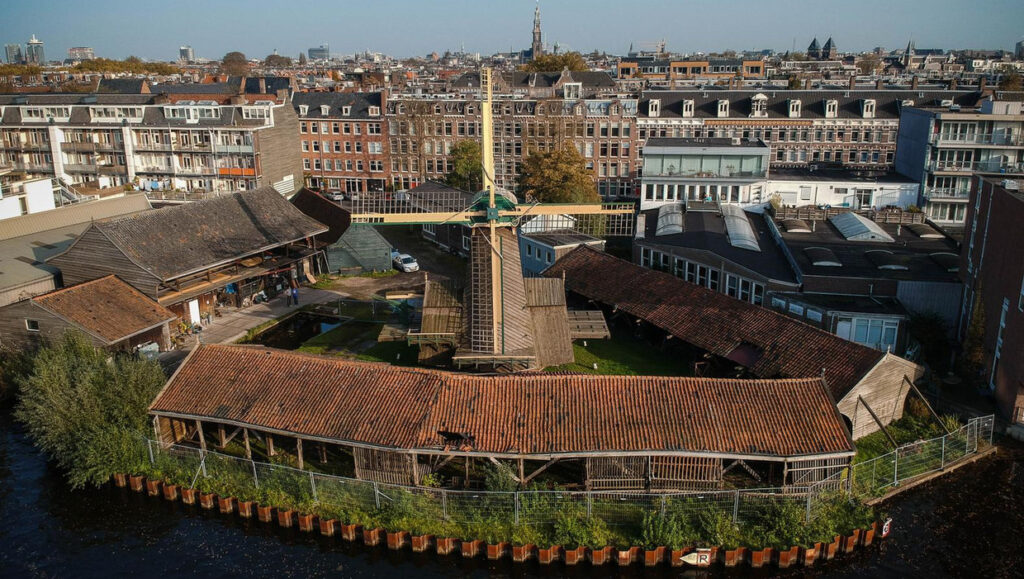
As Amsterdam’s oldest surviving sawmill, De Otter represents an important chapter in the city’s industrial history. Built in 1631, this windmill powered the lumber industry that made Amsterdam’s canal houses and ships possible. The skilled millwrights who constructed it created a machine capable of sawing massive timber beams using only wind power. Though no longer operational, De Otter stands as a protected monument honoring the exceptional craftsmanship that built the Dutch Golden Age.
Quick Facts: Location: Western Amsterdam, near Kostverlorenvaart | Interior: Not open to public | Best for: Exterior viewing, history enthusiasts | Nearby: Rembrandtpark
Private Tour Experiences at Windmills
Private tours to these windmills offer a range of experiences:
- Guided Tours: Delve into the history and mechanics of windmills with expert guides. These tours often include access to parts of the mills not open to the general public, providing a more in-depth understanding.
- Photography Sessions: The scenic landscapes around these windmills present perfect opportunities for photography enthusiasts. Whether it’s the rustic charm of Zaanse Schans or the urban backdrop of De Gooyer, each location offers a unique setting.
- Cultural Activities: Participate in traditional Dutch crafts and demonstrations, such as clog making or cheese production. These activities provide an immersive cultural experience.
- Culinary Experiences: Enjoy local delicacies, particularly at spots like Brouwerij ‘t IJ near De Gooyer, where you can sample artisanal beers and Dutch snacks.
Best Time to Visit and What to Expect
The best time to visit these windmills is during spring when the tulips are in full bloom, or in autumn to witness the vibrant fall colors. It’s advisable to dress in layers as the weather can be unpredictable. Most windmill sites are equipped with visitor facilities, but it’s wise to check in advance, especially for accessibility options.
Combining Windmill Tours with Other Local Attractions
To make the most of your trip, combine your windmill tour with visits to:
- Amsterdam’s Historical Sites: The city’s rich history can be explored through its museums and architecture.
- Countryside Explorations: Venture into the Dutch countryside for a complete experience of the Netherlands’ natural beauty.
- Canal Tours: A quintessential Amsterdam experience, canal tours offer a different perspective of the city and its surroundings.
Practical Tips for Planning Your Windmill Tour
When planning your tour, consider:
- Transportation: Many windmill sites are accessible by public transport from Amsterdam, and private tour operators often offer pick-up services.
- Tour Booking: Book tours in advance, especially during peak seasons, to ensure availability.
- Visitor Etiquette: Respect the sites by following guidelines, and practice sustainability to help preserve these historical landmarks.
Book now






Comments are closed.